This guide is written for a first-time visitor to Europe. It explains everything step by step — how to get off the ship, how to buy train tickets, what to eat, and how to get back safely. Prices are verified as of March 2026 with direct booking links. All timelines build in a 90-minute cushion before the ship departs.
First-Timer Essentials
How Port Days Work
When the ship arrives at a port, you can leave and explore on your own. Show your cruise card as you exit and re-enter. You must be back before the departure time — the ship will leave without you if you're late.
"Dock" vs. "Tender": Most ports, the ship pulls up to a pier and you walk off. At Villefranche, the ship anchors offshore and you ride a small boat called a "tender" to reach land. Tenders run all day, but afternoon lines back can be 20–30 minutes.
Currency & Getting Around
Italy, France, and Spain all use the euro (€). Credit cards work most places, but carry €100–200 in cash for markets and small vendors. Use ATMs (called "Bancomat" in Italy) for the best exchange rate.
Taxis and Uber are readily available in every port city. Don't hesitate to grab a taxi when you're tired or the walk is long — most rides in these cities are €8–15. It's worth the convenience.
Booking Tours
Viator and GetYourGuide are the two main platforms for booking tours. They list local operators, show real reviews, and most offer free cancellation up to 24 hours before. Small-group tours (8–15 people) are usually better quality and cheaper than NCL ship excursions. The trade-off: you're responsible for getting back to the ship on time.
How to Use Trains in Italy & France
1. Buy tickets: Download the Trenitalia app (Italy) or SNCF Connect app (France). Buy with a credit card, ticket stored on your phone.
2. Choose "Regionale": Always pick regional trains — they're the cheap, frequent local trains. High-speed trains cost 2–3x more for these short routes.
3. Validate paper tickets: If you buy a paper ticket at a machine, stamp it in the green machine on the platform before boarding. €50 fine if you don't. App tickets skip this step.
Amalfi Coast (Salerno), Italy
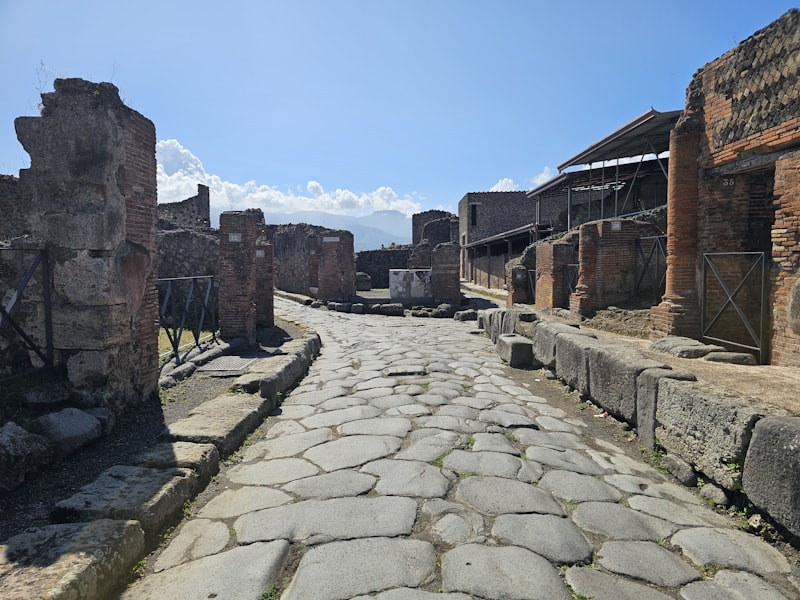
The Big Decision: Pompeii or Amalfi Coast by Boat?
You have two incredible options from Salerno, and you can't do both in one day. Pompeii is a once-in-a-lifetime archaeological experience — an entire Roman city frozen in time. An Amalfi Coast boat tour is a once-in-a-lifetime scenic experience — turquoise coves, cliffside villages, prosecco on the water. Read both options below and decide what calls to you.
Option A: Pompeii
Pompeii was buried by Mount Vesuvius in 79 AD and preserved under volcanic ash for nearly 2,000 years. Walking its streets is surreal — you can see ancient shops, homes, temples, and even chariot ruts in the stone roads. For a history lover, there's nothing else like it on Earth.
A small-group guided tour is the way to go. The guide transforms old walls into a living city. Book on Viator — search "Pompeii from Salerno cruise port." Tours run about €80–95/person including port pickup, skip-the-line entry, and a licensed guide for 2 hours. The site is mostly flat but the ancient stone streets are uneven — wear sturdy shoes.
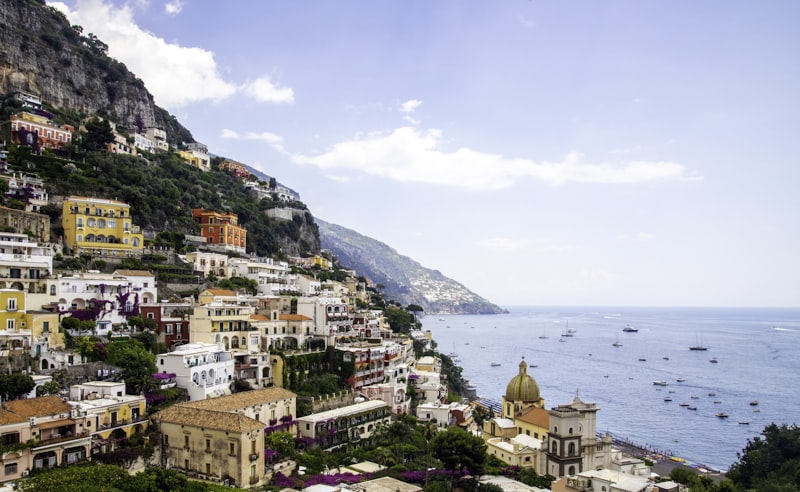
Option B: Amalfi Coast by Boat (The Splurge)
Here's the thing about the Amalfi Coast: the towns are built on cliffs, which means hundreds of stairs. But from a boat, you get the most iconic views without climbing a single step. The UNESCO-designated coastline — pastel villages cascading down cliffsides, turquoise coves, dramatic sea caves — was designed to be seen from the water. For someone who loves photography and prefers easy mobility, a boat tour is actually the best way to experience the Amalfi Coast.
Top Recommended Boat Tours
All depart from Molo Manfredi in Salerno's harbor — a flat 5–10 minute walk from the cruise terminal.
Stops at Amalfi (1 hr) and Positano (1 hr) plus swimming stops. Includes prosecco, caprese sandwich, water, limoncello. Departs 9:30 AM, returns ~4:00–4:30 PM. The most reviews of any option — battle-tested and reliable.
Reviewers say: "Seems expensive but after experiencing it, a complete bargain." Multiple reports of dolphin sightings. Crew members Francesca, Nello, and Cecilia praised by name.
The most intimate option on a sailing boat (more photogenic than a motorboat). Only 8 passengers max. Includes homemade pasta salad, buffalo mozzarella, aperitif, dessert, limoncello. Stops at Cetara, Castiglione, and Amalfi.
Reviewers say: "Francesco and Khouloud were very attentive." Homemade food quality specifically praised. Most personal and relaxed experience.
Important: 8-hour duration means ~5 PM return. Contact Mareggiando before booking to request an earlier departure for your 6 PM ship. Does NOT stop in Positano.
The premium option. Private boat, fully flexible schedule (depart 8:30 AM, guarantee return by 4 PM). Free bar all day (prosecco, soft drinks), brunch, beach towels, snorkeling gear, Wi-Fi. You control the itinerary — extra photo time at Positano, longer swimming stop, whatever you want.
At Your Stops: What's Flat
Amalfi: The waterfront, main piazza, and main shopping street (Via Lorenzo d'Amalfi) are flat or gently sloping. The famous Cathedral sits atop 62 steps — photograph it from below (that IS the classic shot). Browse limoncello shops, grab a gelato. 1–1.5 hours is plenty.
Positano: Arriving by boat is the cheat code — you step off at beach level, bypassing the brutal 300+ stairs from the road above. Sit at a beachfront restaurant, browse the beach-level shops. Don't try to walk up into town. The best photo of Positano is from the boat on approach — tell the captain to slow down.
Catania, Sicily, Italy
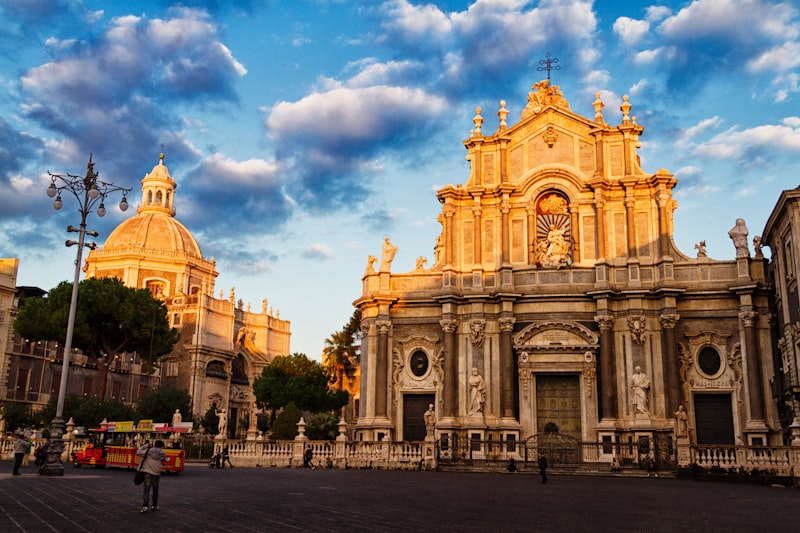
Three Options for Your Day
Catania sits at the base of Mount Etna, Europe's tallest active volcano, in one of Italy's most exciting wine regions. You have three great options depending on what excites you most:
A. Walk Catania in the morning + Etna Jeep tour in the afternoon
B. Dedicated Etna winery tour — for the wine enthusiast in the group
C. Skip excursions and spend the whole day exploring Catania on foot (~€25 total)
Morning: Walking Catania (All Options)
The port is a 15-minute flat walk to the historic center (or a €8–10 taxi). Head to Piazza del Duomo — the Elephant Fountain, the Cathedral (free), then behind it to La Pescheria, the legendary fish market. Go before noon when it's a riot of color and energy — one of the most photogenic experiences in Sicily.
Walk up Via Etnea for a view of Etna framed at the end of the street. Stop at Pasticceria Savia for arancini and cannoli. The Roman Theater (~€6) is a hidden 2nd-century gem.
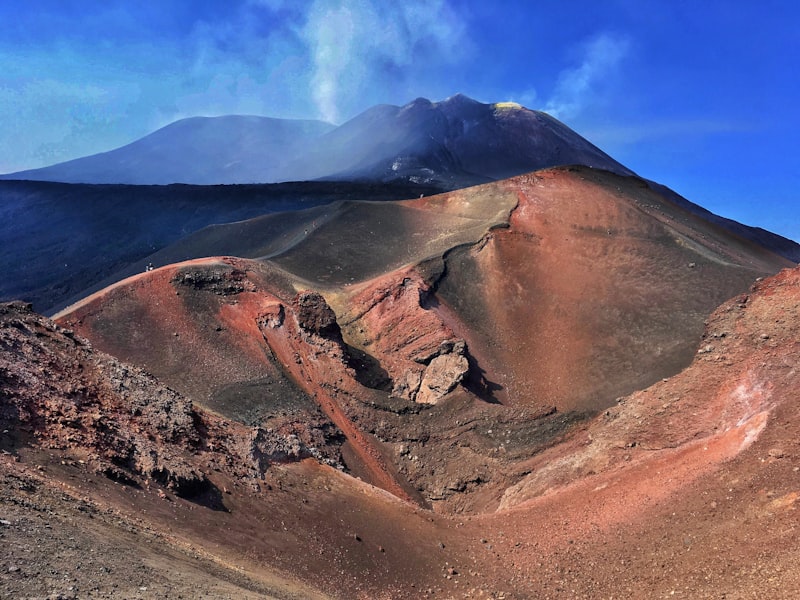
Option A: Etna + Wine Tasting (Afternoon Tour)
4x4 adventure through volcanic landscape, ~45-min easy hike, lava cave exploration (helmets provided), plus winery visit with Etna DOC wine tasting AND olive oil tasting, and a full Sicilian lunch (antipasti, pasta, main, dessert, espresso, wine). All-inclusive.
Designed specifically for cruise passengers. Pickup at Catania cruise terminal, guaranteed return before ship departure. Lava cave, volcano walk, then 5 Etna DOC wines at a family-run winery with light lunch (cheese, olives, bread).
Option B: Dedicated Winery Tour (For the Wine Enthusiast)
The Etna wine region is one of Italy's most exciting — volcanic soil, high-altitude vineyards, Nerello Mascalese reds that rival Burgundy. If someone in the group is passionate about wine, this is the day to go all-in.
This is the wine lover's dream day. Visit 3 acclaimed Etna wineries (rotates among Benanti, Tenuta delle Terre Nere, and others), taste ~10 wines, with food pairings at every stop including a full Sicilian lunch. Private car, English-speaking sommelier, Catania port pickup. No hiking — just vineyard strolls and cellar tours.
Reviewers say: "Absolutely amazing day — three different vineyards, learned and tasted a lot." "Bruno, our driver, was very accommodating!"
Day at Sea
Rest day. Your feet will thank you. If the ship offers a wine tasting event, it's a nice bridge between the Italian wines you've been sampling ashore.
To-do today: Download the Trenitalia app and buy tomorrow's train tickets (Livorno → Pisa → Florence). Download offline Google Maps for Pisa and Florence — no Wi-Fi on regional trains.
Livorno (Florence / Pisa), Italy
Your Longest Port Day
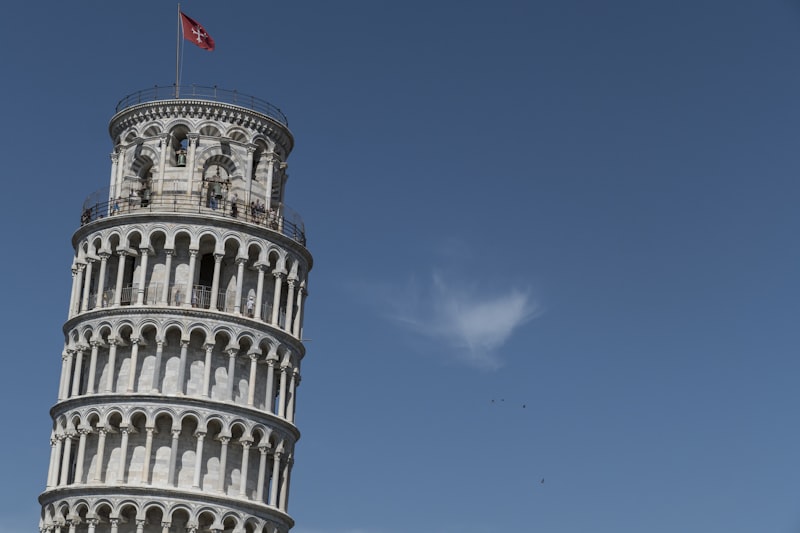
With a 10:00 PM departure, you have ~15 hours in port. Time for both Pisa and Florence at a relaxed pace, all by train for about €24 total transport. Livorno is just the gateway — the magic is in Pisa (20 min by train) and Florence (1.5 hrs).
Step 1: Get to the Trains
Take the NCL shuttle to Livorno center (free or ~€7), then walk 10–15 minutes to Livorno Centrale station. Or just grab a taxi from the port (€10–15 straight to the station).
Step 2: Pisa (~€3 each way, 20 min)
Trains run every 15–30 minutes. From Pisa Centrale station, it's a 20–25 minute flat walk to Piazza dei Miracoli. The Cathedral is free to enter. The Tower climb is €20 (294 spiral stairs — probably skip it). The piazza is flat grass — the exterior photos are the main event. Spend 60–90 minutes here.
Step 3: Florence (~€9 each way, 1 hr)
Train to Firenze Santa Maria Novella (SMN). Everything is within a tight flat walk from the station:
The Duomo: The exterior — pink, green, and white marble — is stunning and free. Spend time photographing it.
Piazza della Signoria: Free open-air sculpture gallery — David replica, Perseus, Loggia dei Lanzi.
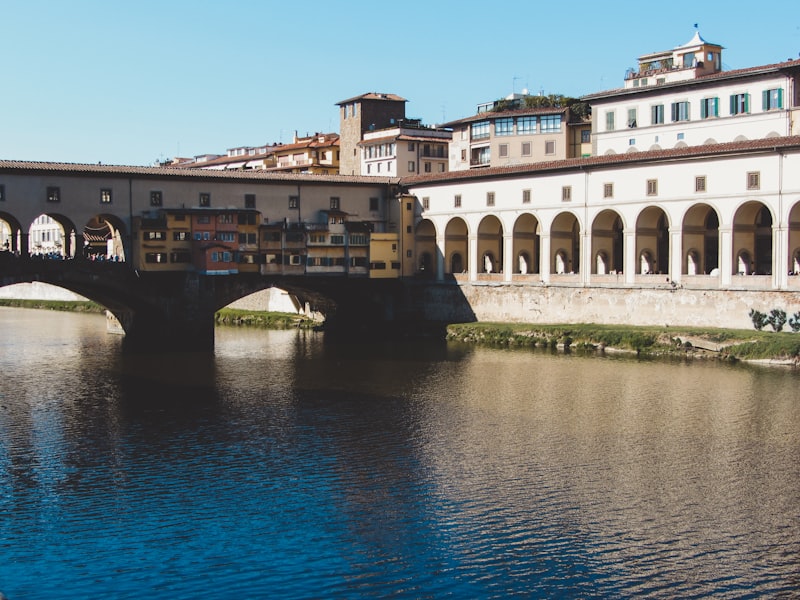
Ponte Vecchio: The medieval bridge lined with gold shops. Late afternoon light on the Arno is golden.
Suggested Timeline
Nice / Monaco (Villefranche), France
Tender Day — What That Means
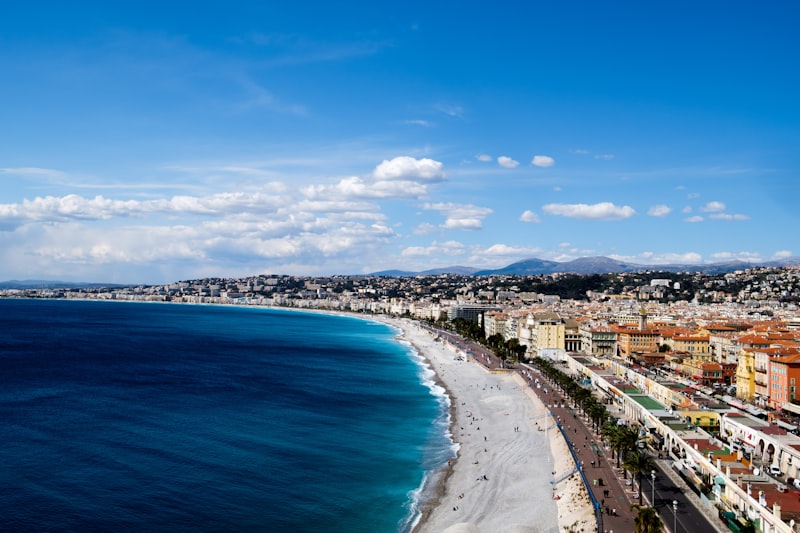
The ship anchors in Villefranche-sur-Mer's bay and you ride a small tender boat to shore (~10 min). The tender drops you on the flat waterfront. From here, Nice is 10–20 minutes away by bus.
Why Nice Over Monaco
Nice wins. Monaco is built vertically on a cliff — lots of up and down even with elevators. Nice is flatter, more affordable, has better food, and hits all your interests. Skip Monaco unless it's a bucket list item.
What to See in Nice
Cours Saleya Market: Vibrant flower and food market, mornings until ~1:30 PM. A photographer's dream — buckets of lavender, fresh produce, olives.
Old Nice (Vieux Nice): Maze of narrow streets with colorful pastel buildings. Mostly flat.
Promenade des Anglais: The famous palm-lined waterfront. Completely flat, stretching for miles.
Castle Hill: Best panoramic view in Nice. Don't walk up — there's a free elevator near the east end of the waterfront. Take it up, enjoy the views, walk down gently.
Includes socca, pan bagnat, pissaladière, macarons, gelato, and more. The best way to taste Nice's unique cuisine with a local guide.
Provence / Marseille, France
Your Shortest Port Day
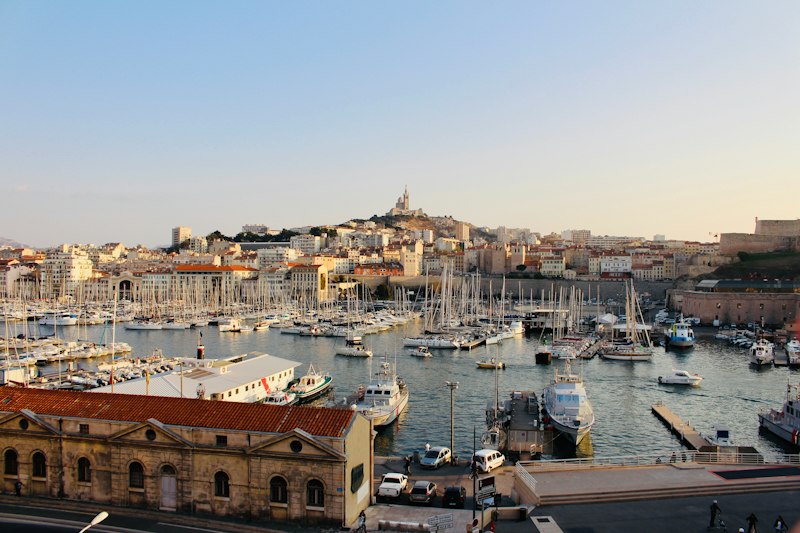
5:00 PM departure means focus on Marseille itself. The good news: the best sights are clustered near the waterfront and mostly flat. NCL runs a free shuttle to the Vieux-Port, or it's a 2 km flat waterfront walk (passing sights along the way). A taxi is ~€15–20.
What to See
Cathédrale de la Major: Massive striped-marble cathedral on the waterfront. Free, flat, jaw-dropping inside. Hit this first on your walk from the terminal.
MuCEM: Striking modern museum in a lattice-concrete cube. The rooftop terrace, Fort Saint-Jean grounds, and walkway are all free. A photographer's paradise. The Ombrière mirror canopy nearby is also worth seeing.
Notre-Dame de la Garde: Best panoramic views in Marseille — 360° of the city, islands, and sea. Don't walk up. Take Bus 60 from the Vieux-Port (€1.70 each way, every 15–20 min). The basilica is free. Budget 60–90 min round trip.
Le Panier: Oldest neighborhood, colorful street art. The lower streets near the port are manageable — don't push too far uphill.
Arriving & Your Hotel
Take a taxi from the cruise terminal directly to your hotel (~€15–20 with luggage). The Sercotel Hotel Caspe is in Eixample — excellent central location on the flat grid-pattern streets, well-connected by metro, a short walk to the Gothic Quarter.
Buy a T-Casual card at any metro station vending machine — 10 rides for ~€11.35, valid on metro, bus, and tram. Supplement with taxis when tired (€7–12 most rides).
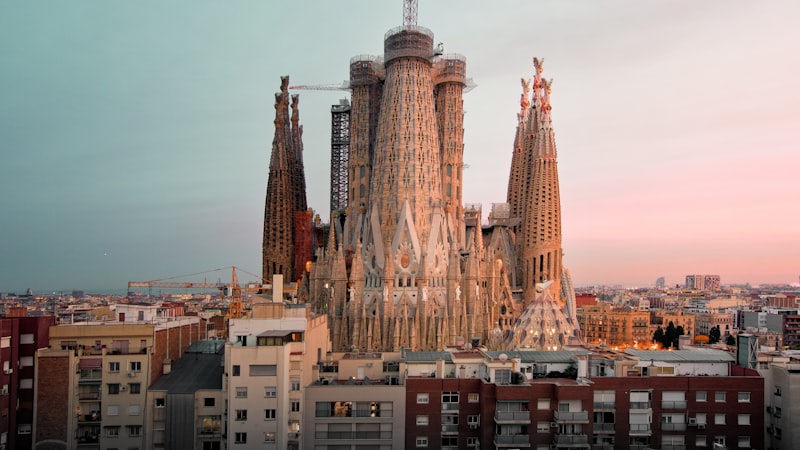
Day 1 (Sat, May 17): Gothic Quarter + Sagrada Familia
Morning: La Boqueria + Gothic Quarter
La Boqueria Market (Mon–Sat, best 9–11 AM). Fresh fruit cups (€2–3), legendary counter bar Bar Pinotxo (€10–15 for tapas). Skip the front stalls.
Then the Gothic Quarter — medieval streets, mostly flat. The Barcelona Cathedral is free (cloister with 13 white geese is charming).
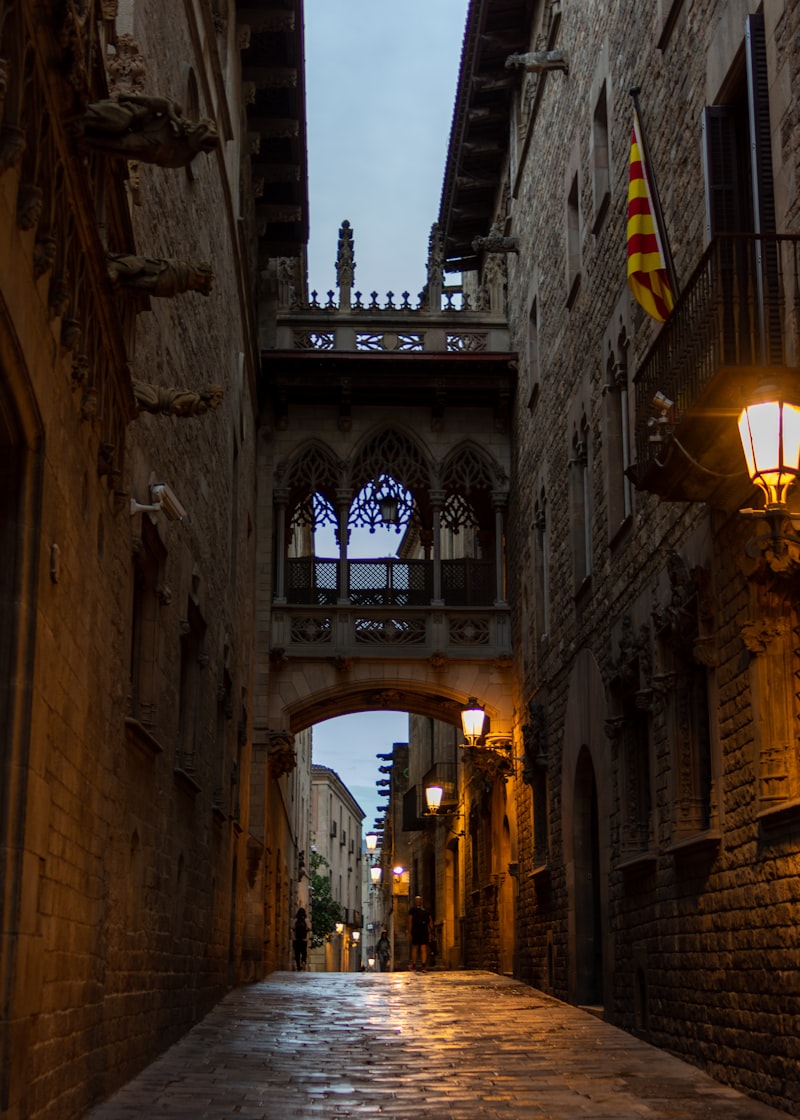
The Roman Ruins (Don't Miss)
Roman Temple of Augustus on Carrer del Paradís — four 2,000-year-old Corinthian columns hidden inside a medieval building. Free. Easy to miss if you don't know it's there.
MUHBA at Plaça del Rei — walk on glass walkways above excavated Roman streets, houses, and an ancient winery. The most extensive underground Roman ruins of any European city. €7 (free Sundays after 3 PM). Allow 1.5–2 hours.
Afternoon: Sagrada Familia
Metro to Sagrada Familia (~15 min). Book tickets well in advance — they open ~60 days before (set a reminder for mid-March). Get a late afternoon slot (4–5 PM) when western sun pours through the stained glass.
Basic entry: €26. With audio guide: €36. Skip tower access (narrow spiral stairs down). The interior is the masterpiece. After, walk Passeig de Gràcia to see Casa Batlló and La Pedrera lit up at dusk (free from outside).
Evening: Tapas & Wine Tour
10+ tapas (enough for dinner), 5 expertly selected wines (cava, whites, reds), three family-run tapas bars in El Born. Start times 5:00–7:00 PM. The best wine-focused food tour in Barcelona.
Day 2 (Sun, May 18): Waterfront + Park Güell
Morning: El Born + Santa Maria del Mar
El Born is flat, pedestrianized, and the best neighborhood for eating and drinking. Visit Santa Maria del Mar — a stunning 14th-century Gothic church (free entry). Then the El Born Cultural Centre — excavated 1700s ruins under glass floors (free to view from above).
Midday: Barceloneta
Walk from El Born to Barceloneta (~15 min, flat). The waterfront promenade is wide and completely flat. For lunch, go inland from the beach for better value. Can Paixano (La Xampanyeria) is legendary for cheap cava and sandwiches. Or find a menú del día (set lunch: appetizer + main + dessert + drink for €12–16).
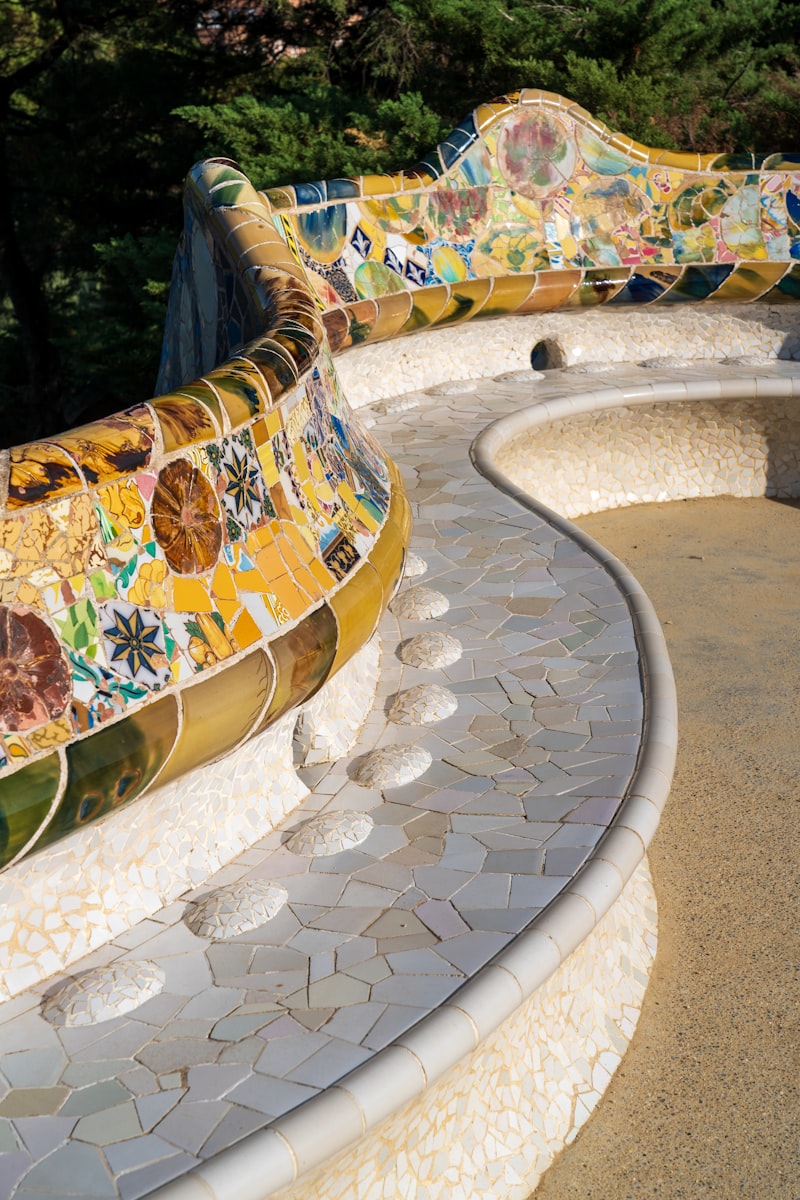
Afternoon: Park Güell
Don't walk up from the metro. Take a taxi to the entrance (~€10–15). The Monumental Zone has some slopes but the main terrace is accessible — the view of Barcelona with the sea beyond is the best from any Gaudí site. Late afternoon light is perfect for photos.
Tickets: €18 general / €13.50 seniors 65+. Book at parkguell.barcelona (timed entry). If you have a MUHBA ticket, it's €14.50 instead.
Evening: Pintxos on Carrer de Blai
Carrer de Blai in Poble Sec — Barcelona's best-value food street. Grab pintxos off the counter (€1.50–2.50 each), beer €2–3, wine €2.50–3.50. Eat and drink well for €15–20.
Day 3 (Mon, May 19): Montjuïc + Loose Ends
Morning: Montjuïc Without the Climb
Metro to Paral·lel, then the funicular (free with T-Casual). From there, the Telefèric cable car to the castle (€17.10 round-trip online). Montjuïc Castle has 360° views (€5, flat once up). On the way down, the MNAC houses extraordinary Romanesque frescoes (€12).
Afternoon: Your Choice
Parc de la Ciutadella is a large flat park near El Born (free). Or return to your favorite neighborhood for one more glass of wine.
• Now: Park Güell tickets, Devour food tour, cable car tickets
• Mid-March 2026: Sagrada Familia tickets (open ~60 days before)
• Sun, May 10 at 10:00 AM sharp: Free Picasso Museum tickets for May 17
General Tips & Booking Summary
Practical Essentials
Shoes: Comfortable, broken-in walking shoes with good grip. Every single day. Not sandals.
Cash: €100–200 from an ATM. Cards work most places but markets and small vendors are cash-only.
Water: Fill a bottle from the ship each morning.
Ship card + passport copy: Carry both. Leave the real passport in the safe.
Tipping: In Europe, rounding up or €1–2 on a meal is generous. Don't feel obligated to tip 15–20%.
Photography Tips
Morning light is your friend — golden glow on ancient stone. Midday washes out photos. Shoot early and again in late afternoon.
What to Book in Advance
Book 2–4 weeks ahead:
• Pompeii or Amalfi boat tour — May 11 from Salerno
• Etna/winery tour — May 12 from Catania
• Sagrada Familia — opens ~mid-March for May dates
• Uffizi if you want it — May 14 afternoon
• Park Güell — book now
• Barcelona food tour — book now
No booking needed: Trains (Livorno day), buses to Nice, everything in Marseille, MUHBA, most Barcelona sights.
Trip Budget Summary
5 cruise port days: ~€350–550 depending on tour choices (Amalfi boat + Etna winery at the high end, DIY at the low end).
Barcelona (2–3 nights): ~€350–500 activities + food (not including hotel).
Grand total ground costs: ~€700–1,050.